Dana White Wants To Ban Jon Jones Oblique Kick From the UFC, But How Dangerous Is It?
UFC CEO Dana White has revealed that he agrees with California State Athletic Commission Chief Andy Foster’s suggestion to ban the use of oblique kicks to the knees in MMA. White made the statement during the post-fight press conference in Week 7 of Dana White’s Contender Series.
“Listen, he is the most powerful guy in the commission,” White said of Foster. “Anywhere in the world, he’s the best. And yeah, we don’t disagree.”
Foster initially proposed the idea of banning oblique kicks to the knee during the Commission meeting after UFC 331 (h/t Aaron Bronsteter).
Foster also wants to discuss making lateral knee kicks a foul and also wants to hold discussions with medical professionals and determine whether a specific peptide that heals cuts and are not performance-enhancing be made legal.
— Aaron Bronsteter (@aaronbronsteter) September 20, 2026
With athletic commissions and the UFC exploring a potential ban on this specific strike, let’s take a look at the effectiveness of “lateral kicks to the knee” and whether or not a rule change is justified.
Iconic Jon Jones Move
The most iconic user of the technique is undoubtedly the former UFC light heavyweight and heavyweight champion Jon Jones. While he may not have invented the technique, he certainly popularized it during his reign as light heavyweight champion.
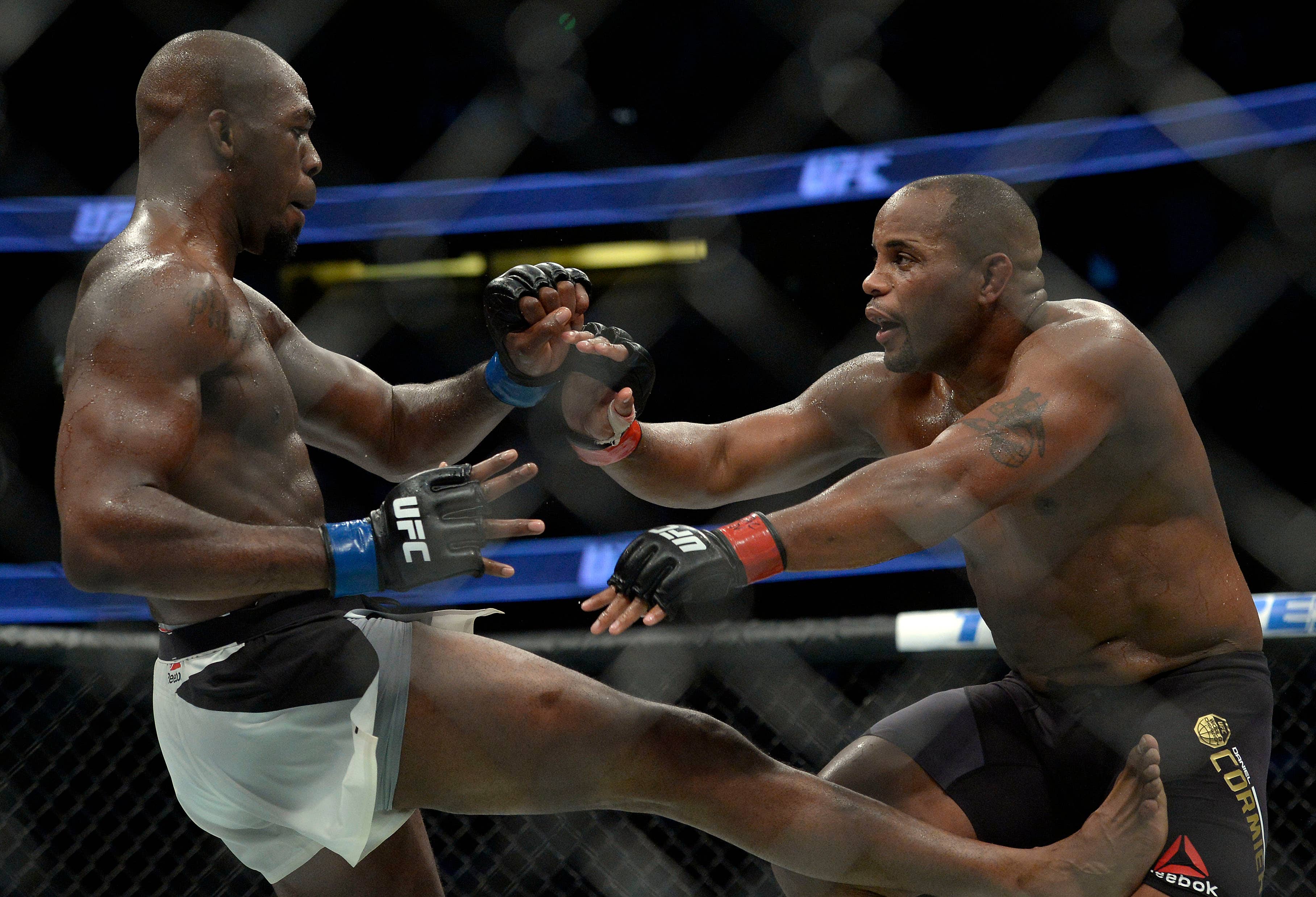
Jones built his legendary UFC career off of his Greco-Roman wrestling background combined with a striking style that utilized his natural length. The oblique kick was one of his primary tools for distance management and deception.
In this “Fight School” series by VICE Sports, Jones and his former MMA coach Mike Winkeljohn explained their philosophy behind using such a dangerous strike.
“You’re allowed to hit somebody in the head and give them brain damage, but they’re worried about their knee. I’m all about my guy not getting brain damage,” Winkeljohn stated.
Jones added, “It’s a very controversial move, but if someone’s trying to give us brain damage, we believe that it’s an even trade-off to give them a little limp for the rest of their lives.”
Jones, who Dana White himself considers the greatest fighter of all time, gave compelling arguments as to why the strike should remain legal. Let’s take a look at some other recent examples.
Recent Examples
In the middleweight prelim bout between Edmen Shahbazyan and Brunno Ferreira during UFC 331, Ferreira utilized the technique, which prompted Shahbazyan to complain to referee Mike Beltran during the fight.
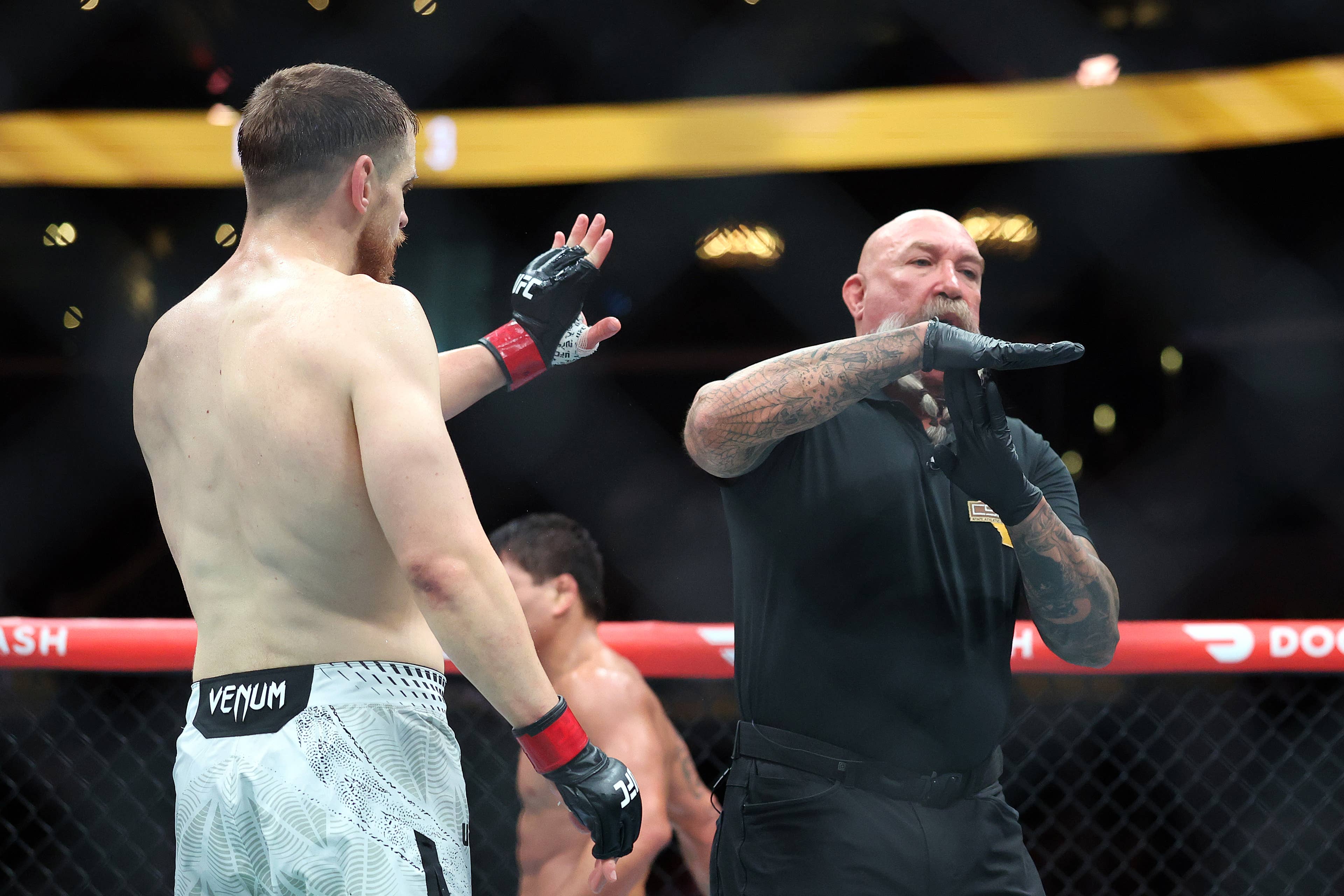
Seemingly unaware that the technique is perfectly legal under the current rules, the fight went on, and Shahbazyan ended up winning the bout by unanimous decision. Despite his complaints, Shahbazyan has not reportedly suffered any knee injury, instead being medically suspended for six months due to a fractured foot.
Though Shahbazyan was not injured due to the strike, his complaints were enough to spur discussion among the CSAC and its chief, Andy Foster.
Another recent example involved the UFC’s current flyweight champion, Joshua Van.
During Van’s back-and-forth barnburner with Brandon Royval at UFC 317 in June 2025, Van utilized the technique heavily, winning him the decision and giving him the title shot.
In the aftermath of the fight, Royval shared on his Instagram that he suffered a torn MCL, which didn’t require surgery but prompted him to undergo rehab. Royval was able to return to competition in December of that year against Manel Kape.
One severe case of the dangerous kicks possibly affecting the career of a fighter would be the unfortunate case of Shavkat Rakhmonov.
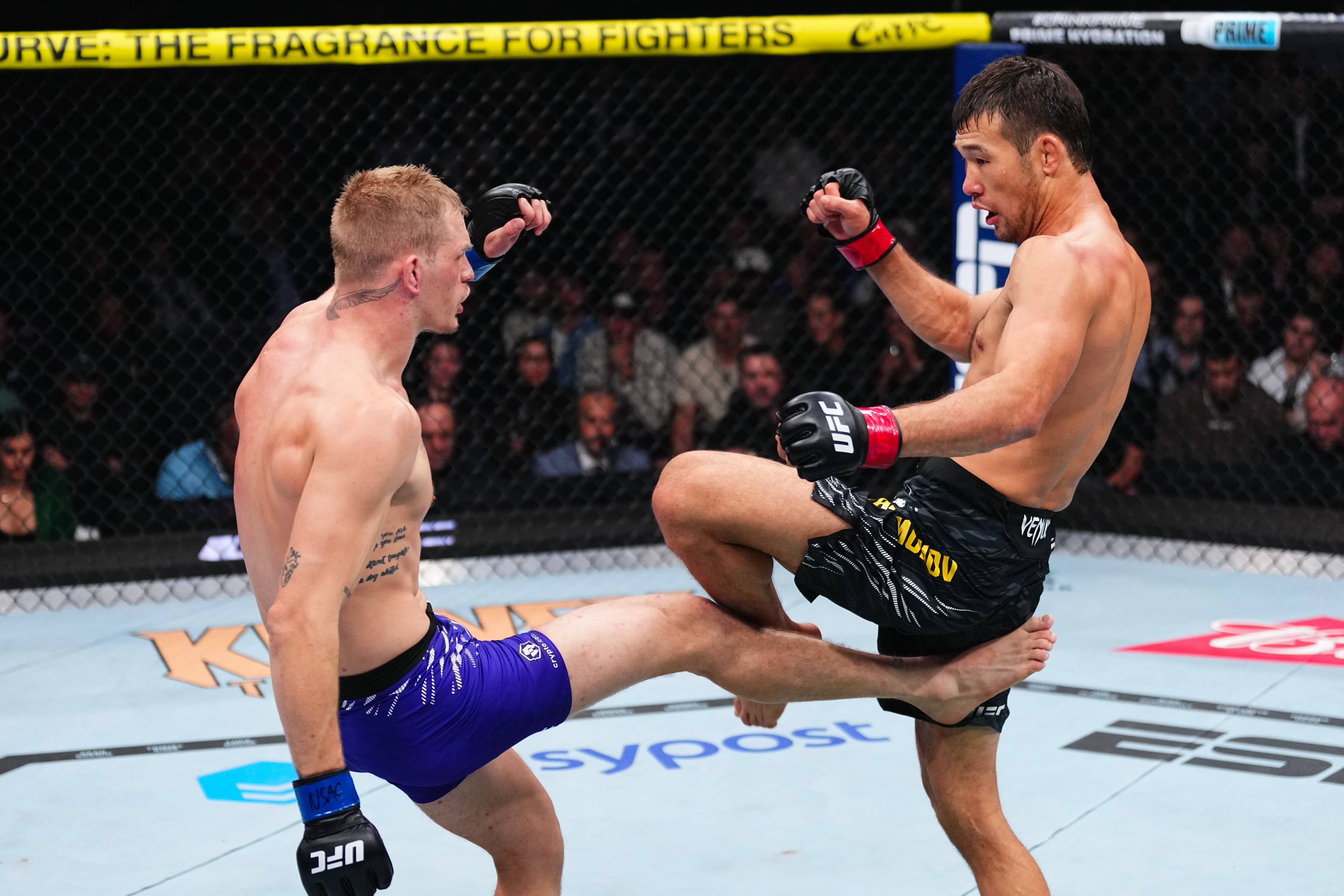
Despite defeating Ian Garry in their December 2024 fight at UFC 310, Garry’s use of oblique kicks throughout the five-round ordeal caused meniscus and ACL damage, which Rakhmonov still has not fully recovered from.
Rakhmonov was once touted as the eventual welterweight champion, as he is still undefeated with 19 wins and 18 finishes. Due to his injuries, however, the fighter from Kazakhstan was sidelined from competition while his welterweight peers have stayed active and changed the landscape of the division.
His inactivity has caused him to drop off the face of the welterweight rankings despite maintaining a pristine record, and his timeline for a return to the UFC Octagon is projected for early 2027.
It’s unclear whether or not “Nomad” can keep his undefeated record after a lengthy process of injury rehab, but it can be argued that oblique kicks have taken more than two years off of his prime.
Another, more extreme case occurred during Khalil Rountree’s infamous fight against Modestas Bukauskas in 2021 during UFC Fight Night 191.
In that fight, Rountree won via TKO after landing a stomp on Bukauskas’s left knee.
Khalil Rountree ended his fight against Modestas Bukauskas with an oblique kick. pic.twitter.com/1iGRcHmeb3
— ESPN MMA (@espnmma) September 4, 2021
Despite the loss and sustaining severe knee ligament injuries to his MCL, ACL, and meniscus, Bukauskas actually defended the use of Rountree’s technique.
“This is bloody fighting at the end of the day,” he stated in an interview with MMA Fighting. “I should have been more wary of that. It’s a completely legitimate technique.”
While Bukauskas was initially released from the UFC following that loss, he made his way back into the promotion and has gone 8-2 in the UFC since his defeat at the hands (or rather, the foot) of Rountree.
Is A Rule Change Probable?
Here is where reality intrudes. The Unified Rules of MMA are not controlled by the UFC, but are written and adopted by the Association of Boxing Commissions and Combative Sports (ABC), with each state athletic commission deciding individually whether to adopt them.
Foster’s proposal would need to navigate the ABC’s committee process, survive medical review, and then be adopted by commissions across the United States—and ideally internationally. The last major attempt to revisit oblique kicks came in 2021 after the Rountree-Bukauskas injury. It went nowhere.
Even if a ban were adopted, enforcement presents a nightmare for referees. Oblique kicks occur in a fraction of a second, often in the chaos of a standing exchange.
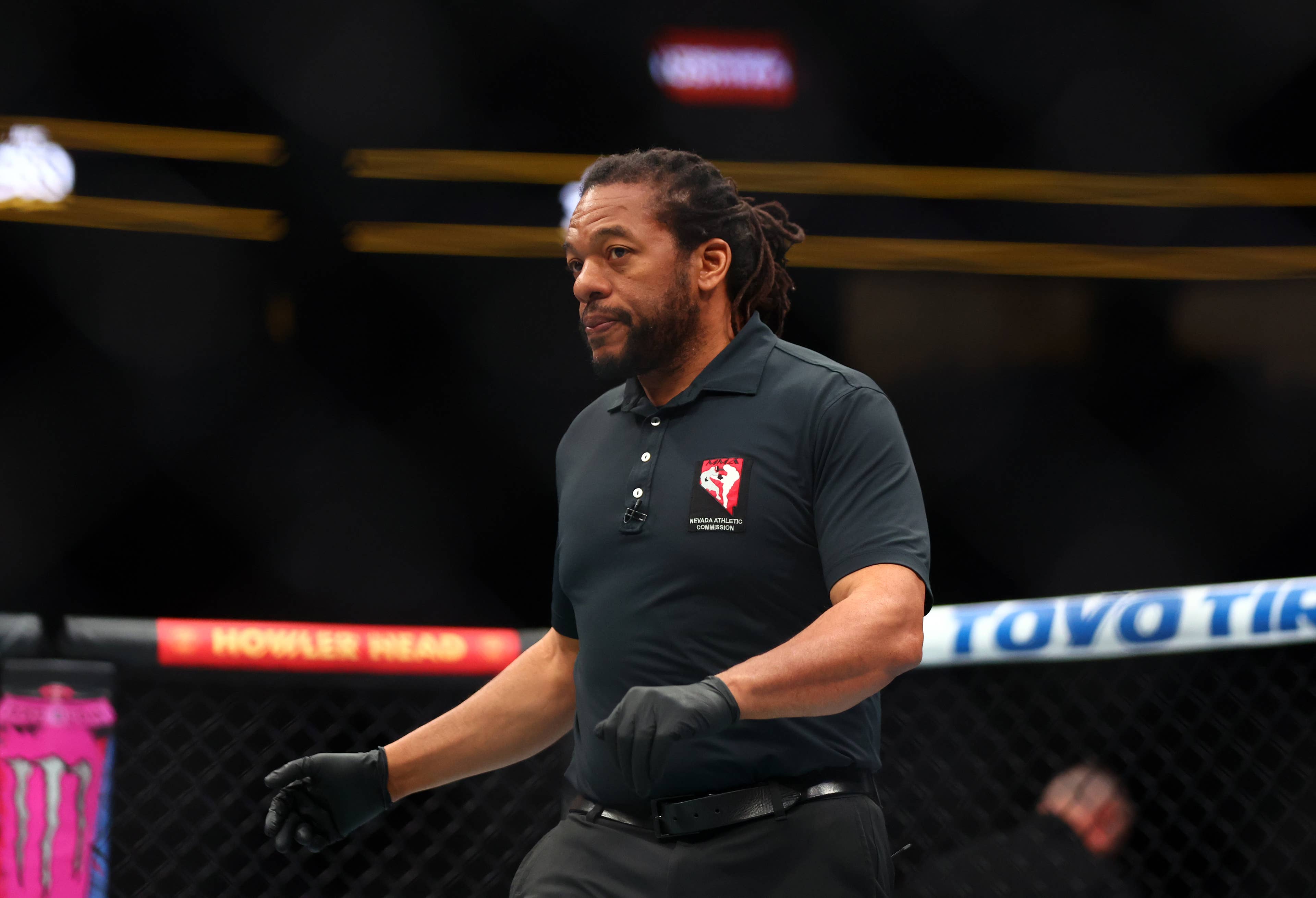
Referees already struggle to consistently identify eye pokes, fence grabs, and strikes to the back of the head in real time. Distinguishing an illegal knee-destabilizing kick from a legal side kick to the thigh requires split-second judgment and a clear angle, which is something referees frequently lack.
Foster himself acknowledged this complexity. According to Bronsteter’s reports, Foster has proposed reclassifying fouls as “incidental, reckless, or malicious” rather than the current binary of “unintentional or intentional.”
That framework might help referees categorize oblique kicks after the fact, but it does not solve the instantaneous detection problem.
Then there is the question of severity. A fighter might graze the knee without intent, or land cleanly in a way that looks innocuous but causes catastrophic damage. Should both be treated equally? The current foul system offers no clear answer.
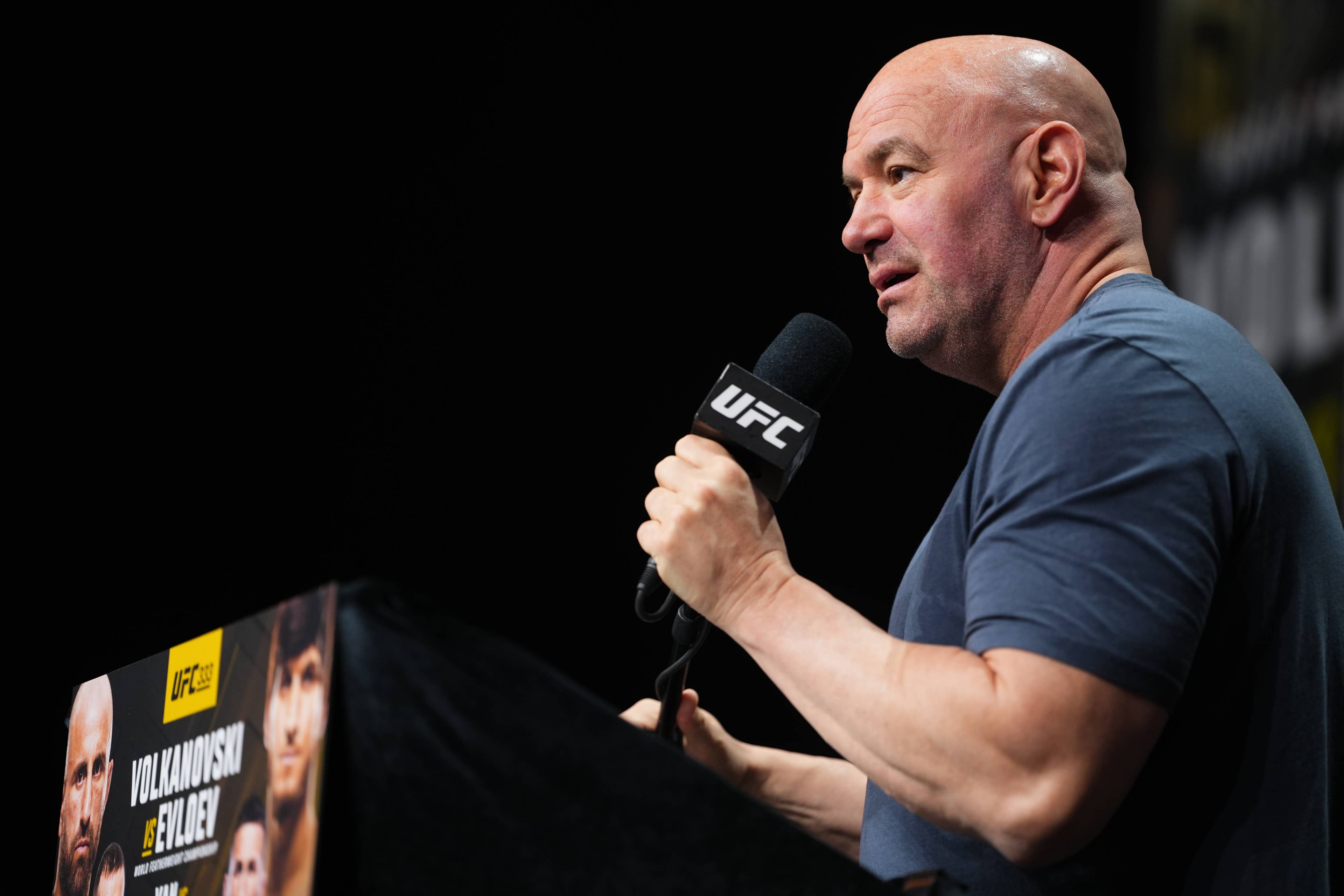
White’s support is influential, but it is important to remember that his opinion is not regulatory authority.
Foster’s proposal remains in the discussion phase. The ABC would need to convene, review medical evidence, and draft language specific enough to be enforceable yet broad enough to avoid banning legitimate leg kicks.
For now, oblique kicks remain legal. Fighters will continue using them. Referees will continue allowing them. And the debate will continue, likely until the next serious knee injury forces the issue again.
More MMA News
- UFC Fight Night: Rosas Jr. vs. Barcelos — Full Card, Start Times, and How to Watch
- Dana White Fires Back At UFC Veteran Demanding Release
- UFC Champ Joshua Van Admits Joe Rogan Comment Stung Him Before UFC 331 Fight
- Who Beats Joshua Van? A Look At The Top Three Next UFC Championship Contenders
This story was originally published by Athlon Sports on Sep 24, 2026, where it first appeared in the MMA section. Add Athlon Sports as a Preferred Source by clicking here.