UFC 335: Three Banger Fights Set For Final 2026 Numbered Card
UFC 335 is beginning to look like a fitting finale to the UFC’s 2026 numbered-event schedule. The Dec. 12 card at T-Mobile Arena in Las Vegas will feature three officially announced matchups: Charles Oliveira vs. Diego Lopes for the BMF title, Alex Pereira vs. Sergei Pavlovich in a five-round heavyweight co-main event, and Joe Pyfer vs. Bo Nickal at middleweight.
The lineup is notable because none of the three fights is simply a ranking exercise. Each matchup puts a proven specialist against an opponent capable of attacking a different area of his game, creating three fights where habits and stylistic discipline could matter as much as raw talent.
The three fights were announced at the end of the UFC 332 broadcast this past weekend, with UFC commentators Joe Rogan, Daniel Cormier, and Jon Anik giving their immediate reactions to the news.
#UFC335 is absolutely STACKED
— UFC on Paramount+ (@UFConParamount) October 4, 2026
▫️Charles Oliveira vs Diego Lopes
▫️Sergei Pavlovich vs Alex Pereira
▫️Joe Pyfer vs Bo Nickal
📺 @paramountpluspic.twitter.com/WMMuZCE3qT
Let’s break down these three UFC 335 fights.
BMF Title Fight
Oliveira vs. Lopes is the most intriguing stylistic matchup of the three because both fighters are comfortable turning chaotic exchanges into finishing opportunities. Oliveira has built his career around opportunistic grappling, while Lopes combines aggressive jiu-jitsu with increasingly dangerous boxing and power punching.
Oliveira enters the fight after dominating Max Holloway over five rounds at UFC 326 to win the BMF title. The former lightweight champion has 22 submission victories and averages 2.6 submission attempts per 15 minutes.
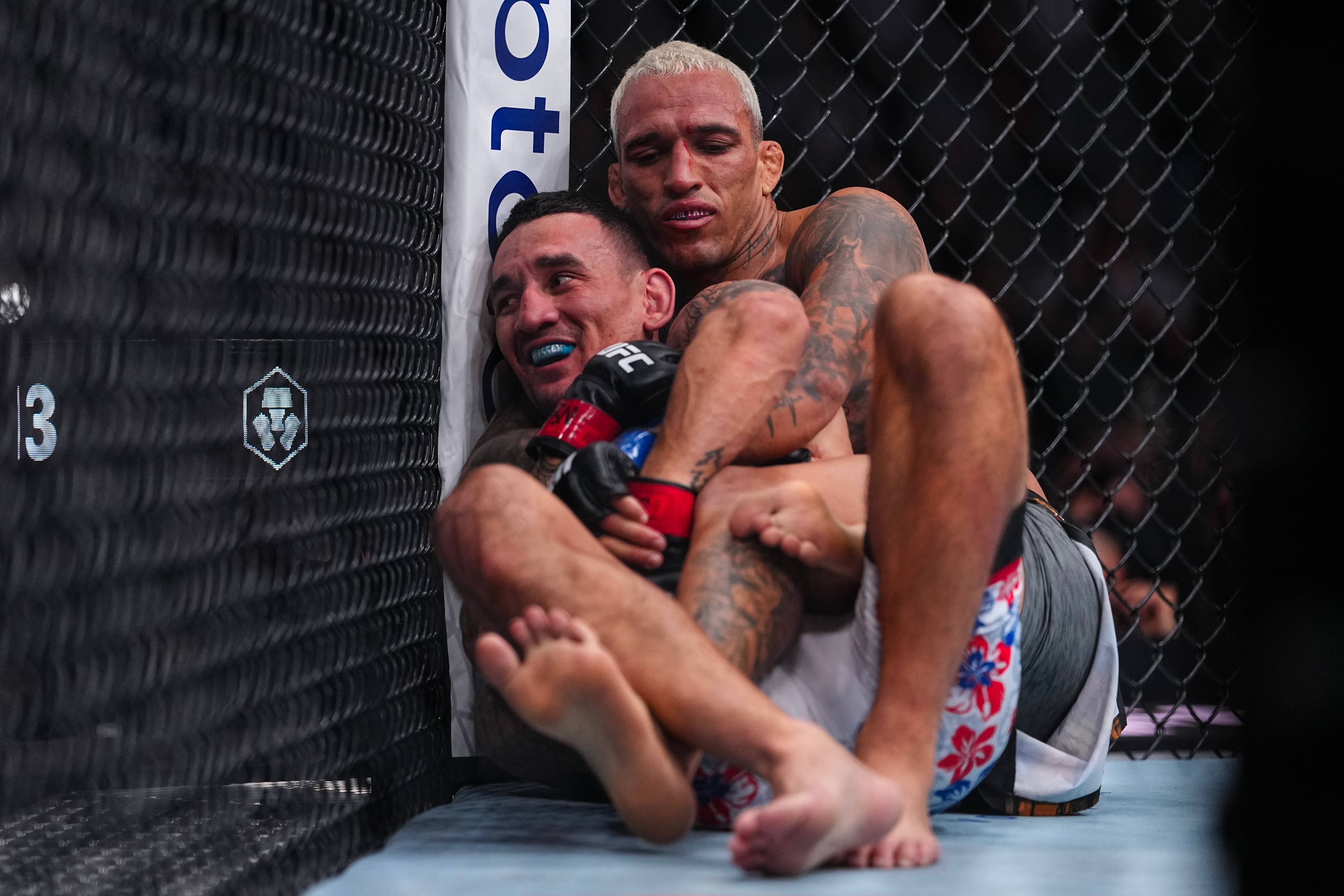
Oliveira can be difficult to game-plan against. He does not necessarily need a prolonged wrestling sequence to get his grappling going, because he is dangerous during transitions, against the fence, and immediately after opponents are hurt.
Lopes presents a different but equally threatening version of that pressure. The former featherweight title challenger owns 12 knockout wins and 12 submissions, with 15 first-round finishes, but his UFC numbers also show that he absorbs 4.65 significant strikes per minute.
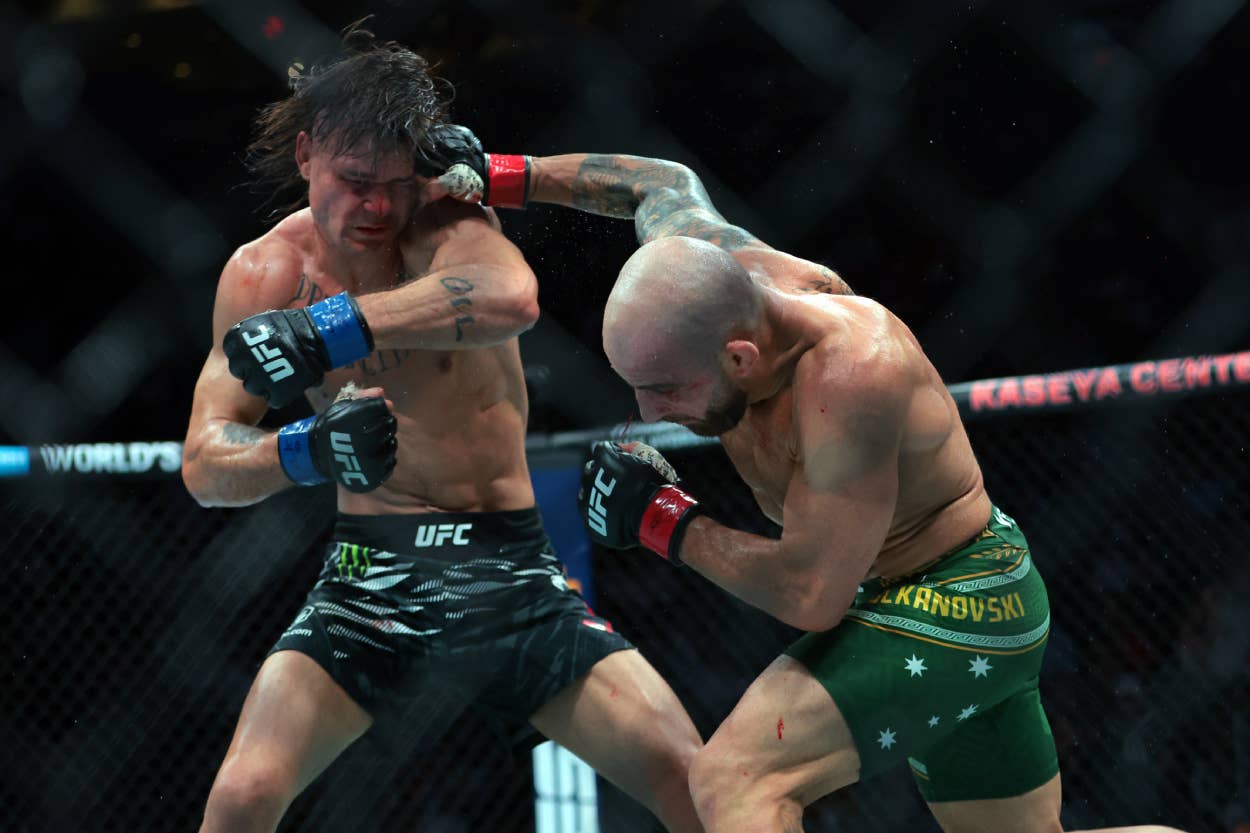
That defensive vulnerability could become important against Oliveira, who routinely attacks when opponents give him an opening rather than waiting for a perfect position. Lopes’ best path may therefore involve forcing Oliveira backward with combinations and making the Brazilian defend his striking rather than allowing him to dictate the rhythm of the fight.
The biggest question is whether Lopes’ move to lightweight changes the physical dynamic enough to make that pressure more effective. Lopes has already proven he can compete with elite featherweights, but Oliveira is a larger, more experienced lightweight who has spent years weaponizing opponents’ mistakes.
Heavyweight Fireworks
The co-main event could be the most dangerous fight on the entire card. Pereira and Pavlovich are both knockout artists, but their approaches to striking create an interesting contrast between precision and sustained pressure.
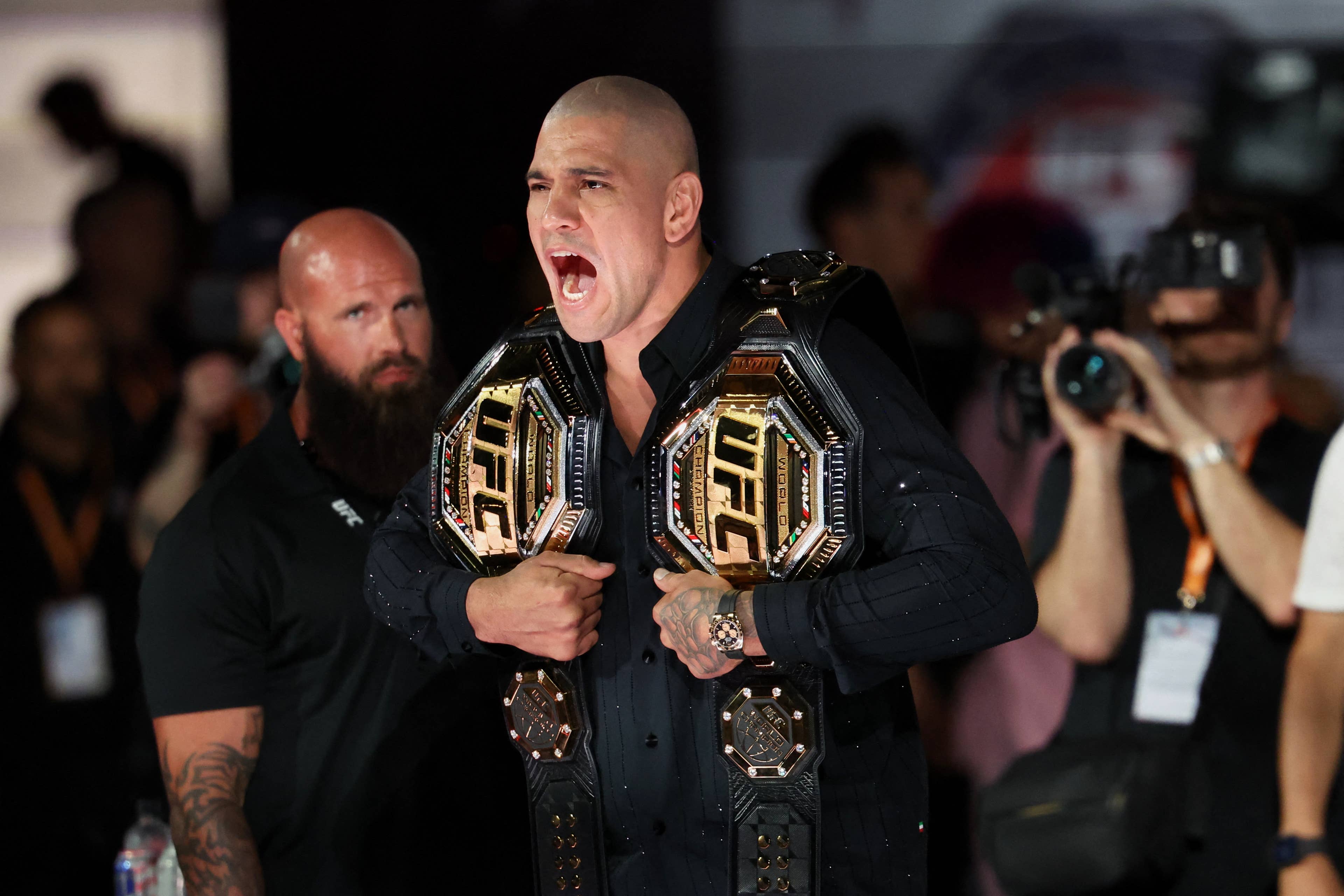
Pereira is moving into his second heavyweight fight after losing to Ciryl Gane at UFC Freedom 250. The former middleweight and light heavyweight champion lands 5.01 significant strikes per minute in the UFC while absorbing 3.72, and his MMA career includes 11 knockout victories, with eight of those occurring inside the UFC.
Pereira does not rely only on his punching power. His ability to manipulate range with calf kicks, feints, and a stiff jab forces opponents to make defensive decisions before he commits to the damaging shot.
Pavlovich, however, is one of the few heavyweights who can make a technical striker uncomfortable simply by maintaining a terrifying level of forward pressure.
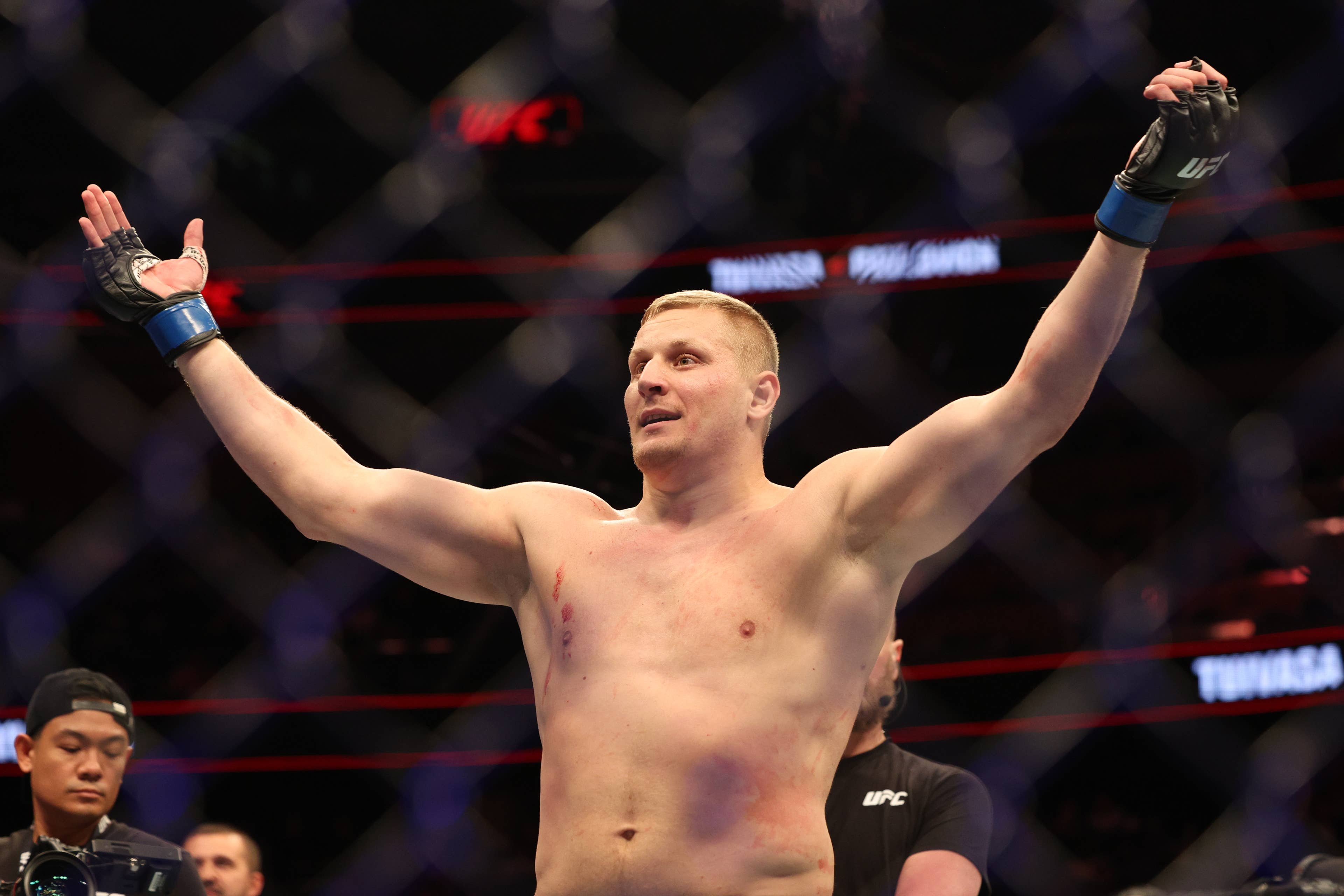
The Russian has 16 knockout victories, all 16 of his first-round finishes, and averages 4.49 significant strikes landed per minute.
His pressure also tends to come behind long punches and combinations rather than isolated haymakers. Pavlovich has shown an ability to overwhelm opponents once he gets them retreating, making Pereira’s footwork and distance management especially important.
The five-round structure adds another layer to the matchup. UFC confirmed Pereira-Pavlovich as a five-round co-main event, giving both men more time to make adjustments but also increasing the importance of avoiding unnecessary exchanges early.
For Pereira, the ideal fight probably involves forcing Pavlovich to reset and making him pay for overextending. For Pavlovich, the objective is much simpler: keep Pereira defending, prevent him from establishing his preferred range, and turn the fight into a sustained boxing battle before Pereira’s precision becomes decisive.
Middleweight Bout
Joe Pyfer vs. Bo Nickal offers the clearest clash between established finishing power and elite wrestling upside. Both middleweights have enough finishing ability to make every phase of the fight meaningful, but Nickal’s wrestling gives him a fundamentally different route to victory.
Pyfer enters the matchup with a 16-3 record and 10 knockout wins, including a TKO win over former champion Israel Adesanya. His UFC profile lists boxing as his primary fighting style, and he averages 3.52 significant strikes landed per minute while absorbing 3.22.
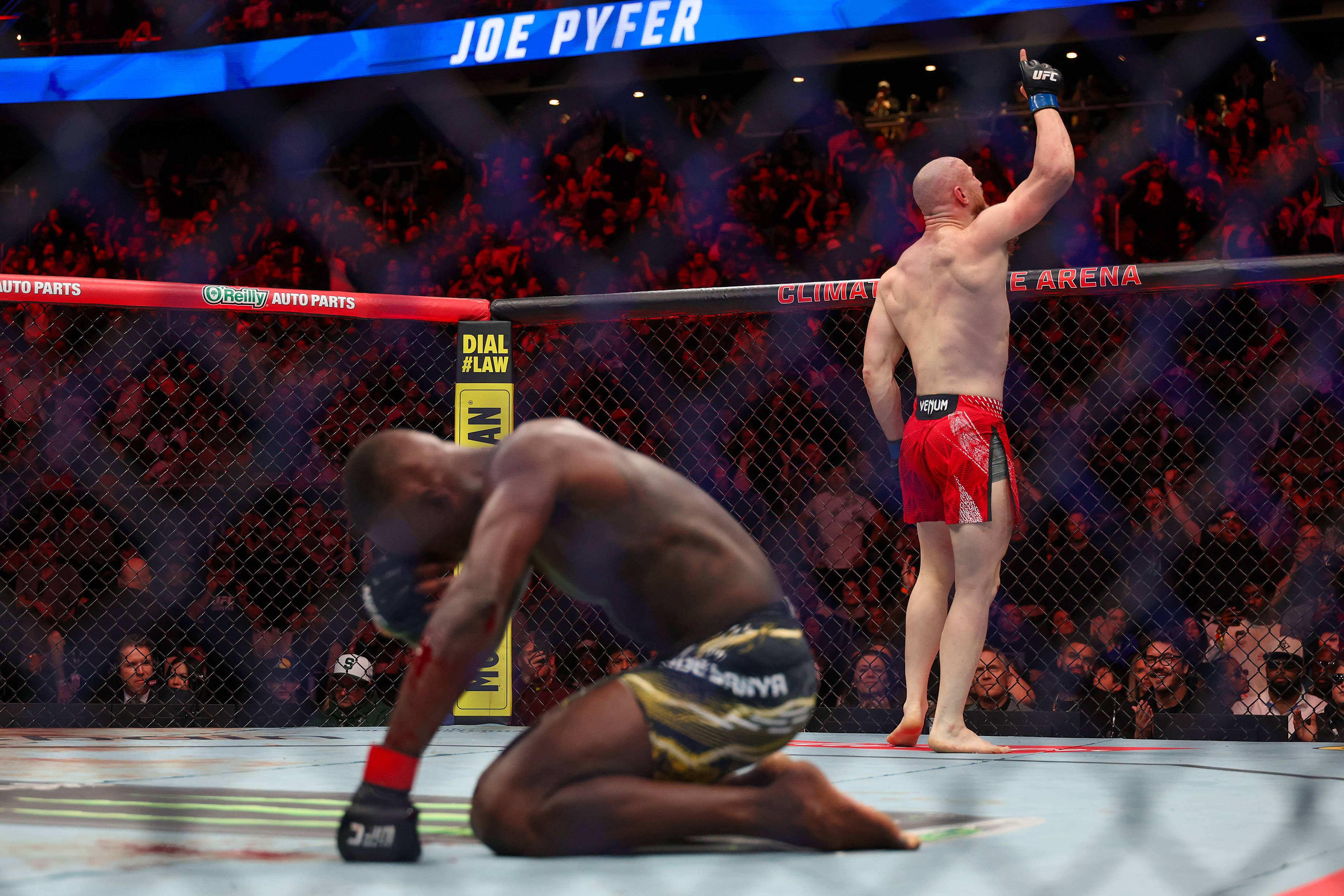
More importantly, Pyfer has demonstrated that opponents cannot simply assume he will collapse once a fight becomes grappling-heavy. He has four submission victories and has repeatedly shown enough physical strength to make opponents pay for entering exchanges carelessly.
Nickal is the more obvious wrestling specialist. The three-time NCAA champion has four UFC submission victories and four knockouts, with six first-round finishes, and his UFC statistics list 3.12 takedowns per 15 minutes.
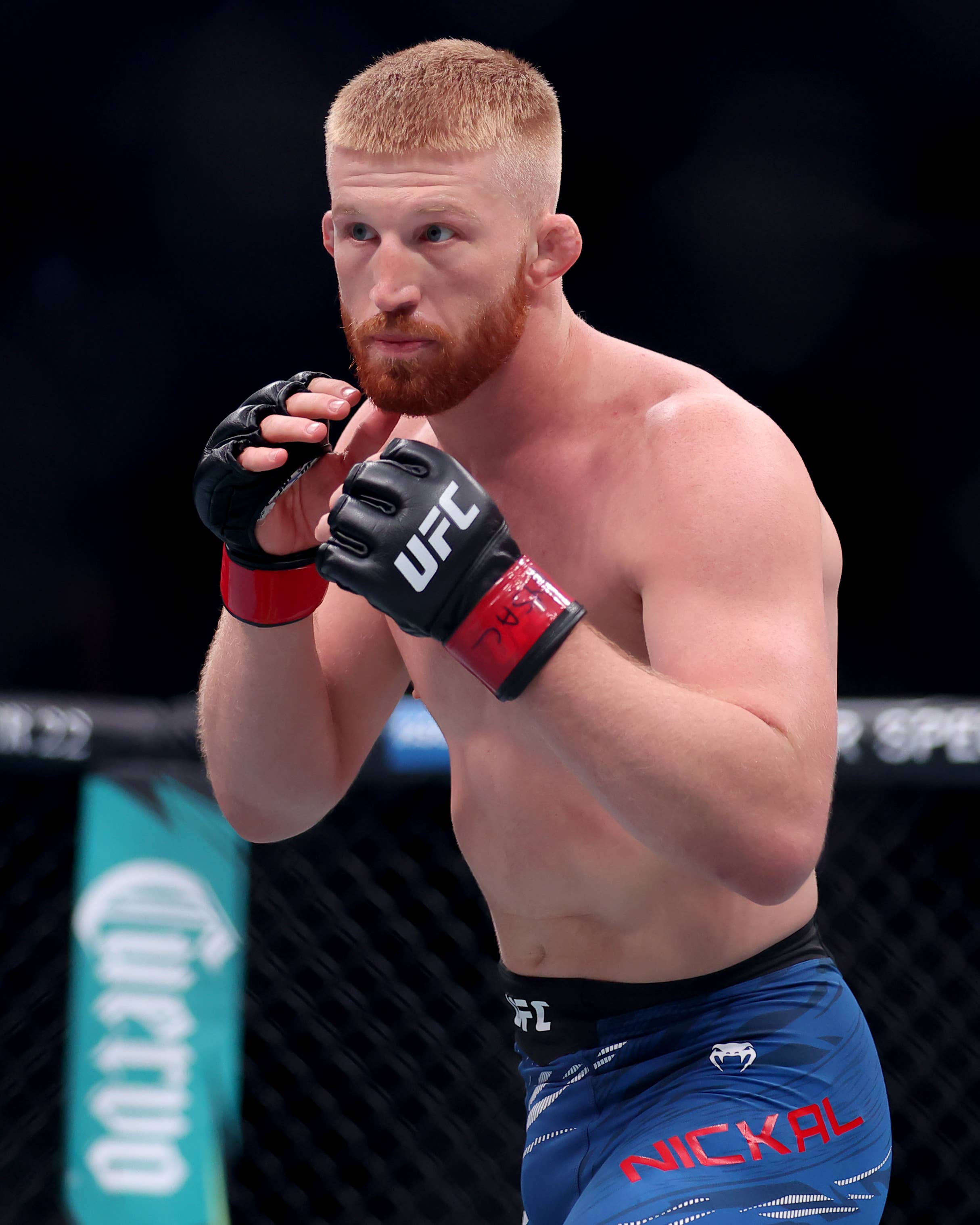
His most recent performance also showed a willingness to let his striking do more of the work. Nickal stopped Kyle Daukaus with strikes at 4:34 of the first round at UFC Freedom 250, adding another dimension to a game that was originally built almost entirely around his wrestling reputation.
Pyfer therefore cannot afford to become predictable with his offensive pressure. If he walks forward without respecting Nickal’s entries, the former Penn State wrestling standout can turn one failed exchange into a takedown and potentially control the fight from the top.
Nickal faces a different problem if he becomes too reliant on wrestling. Pyfer’s power means that even a short striking exchange can change the fight, particularly if Nickal shoots from too far away or exits a grappling exchange without protecting himself.
UFC 335 Already Has Three High-Stakes Tests
The significance of UFC 335 is not limited to the names involved. Oliveira is defending the BMF title against a dangerous featherweight moving up, Pereira is attempting to establish himself at heavyweight against one of the division’s biggest punchers, and Nickal is taking another step toward the middleweight elite against a fighter with legitimate knockout power.
The event is scheduled for Dec. 12 at T-Mobile Arena, making it the final numbered UFC event currently scheduled for 2026. The UFC previously announced UFC 334 for Nov. 14 and UFC 335 for Dec. 12 as the final two numbered events of the year.
There is still plenty of time for additional fights to be added, meaning the three announced matchups should be viewed as the foundation rather than the finished card. But even in its current form, UFC 335 already has three fights built around sharply contrasting styles.
More MMA News
- Sean O’Malley Responds to UFC Rival Following Brutal First-Round TKO
- UFC 332 Shattered Records With Knockout Barrage: Watch All of Them Here
- Did Herb Dean Stop the King Green vs. Esteban Ribovics UFC 332 Fight Too Soon?
- UFC 335: Alex Pereira’s Newly Announced Fight Comes With Huge Stakes
This story was originally published by Athlon Sports on Oct 5, 2026, where it first appeared in the MMA section. Add Athlon Sports as a Preferred Source by clicking here.